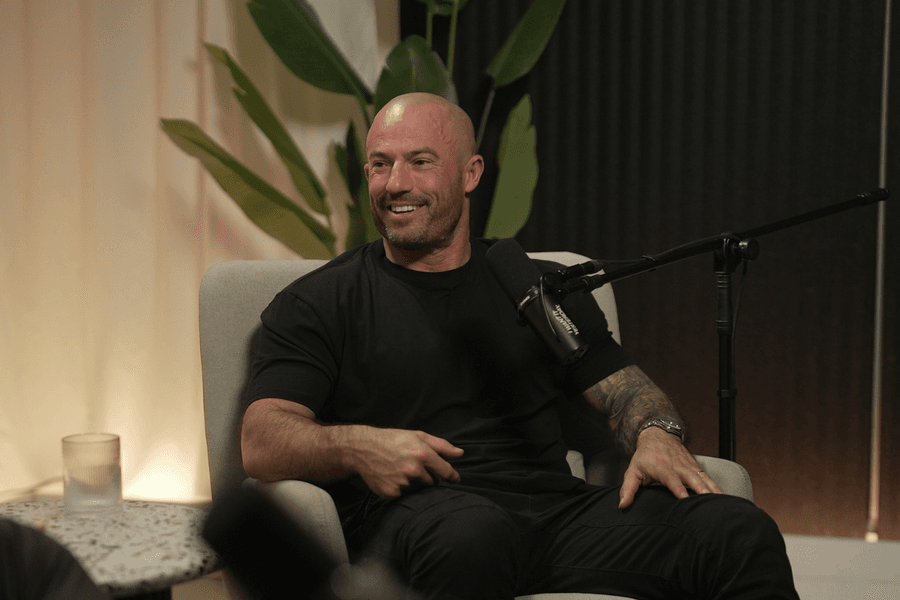
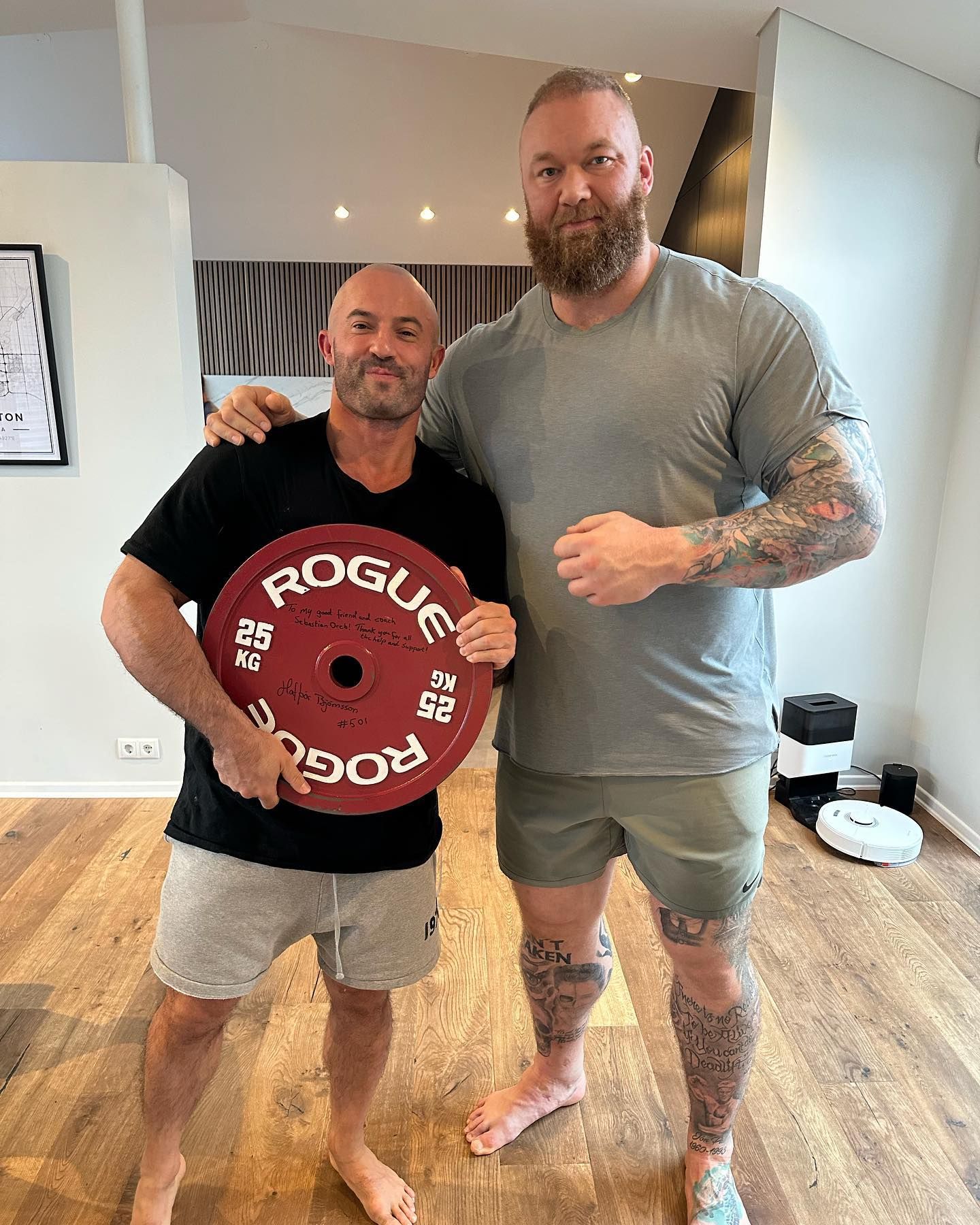
Sebastian Oreb has been coaching strength for over two decades. His most well-known client is Hafthor Bjornsson, the man you'll know as Thor, or as the Mountain from Game of Thrones, or simply as the strongest man alive.
He was a recent guest on the Raise the Bar podcast, and at the time of recording, Sebastian was two weeks out from coaching Thor toward a 515kg deadlift, a number that would break the current world record.
You'd assume that the way Sebastian trains Thor is a way that is completely out of reach for the rest of us.
Turns out, it isn't.
The framework he uses to get there is built around a 16-week cycle, broken into four distinct phases. And it's the same framework whether the number on the bar is 500kg or 50kg,
The mistake Sebastian sees most often when it comes to building strength is people skipping straight to max attempt after max attempt without a proper structure behind it.
Instead, Sebastiran recommends a clear and simple 16-week structure that builds some serious strength.
Sebastian Oreb’s 16-Week Program to Build Strength
1. Familiarisation | Weeks 1-4
Before any big loading happens, the first four weeks are spent learning the movement patterns properly and establishing what you are actually capable of.
The goal isn't to jump straight into heavy weights. Instead, work at a more conservative weight to ensure the form and range of motion are where they need to be to successfully and safely push the weight from phase two onwards. Beware - conservative doesn't mean easy!
This is the phase you may be tempted to rush, but having the right base is arguably the most important!
2. Build Size | Weeks 5-8
The next focus is on building muscle size, otherwise known as hypertrophy, working in the 8 to 12 rep range with higher volume overall. The goal here is to build more muscle size and capacity, so that you have more to work with later.
Sebastian doesn't always use the same exercises here that he'll use once strength becomes the focus. A squat might be done with the heels elevated and a higher bar position during this phase, because that version builds more muscle, even though it's not the version he'll eventually test a max on.
The exercise that grows the muscle isn't always the one that lifts the most weight.
3. Build Strength | Weeks 9-12
Phase three sees the reps coming down to 3-6. This is where the body learns to actually move heavier loads. Lifting heavy well is a skill you get better at with practice, not something that just appears because you've built some muscle.
4. Peak | Weeks 13-16
Over the last four weeks, Sebastian shifts the goal one more time.
"The last four weeks are the peak, where I will teach the individual the skill of a one rep max."
Reps drop right down, and the intensity climbs, working toward a single heavy lift. By the time testing comes around, lifting close to a max doesn't feel like a shock; it feels rehearsed.
"In week 16, we test your max, and we see how far you've come."
How hard should each week feel?
Within each four-week phase, Sebastian builds intensity gradually rather than pushing hard from session one.
"I like to start conservatively. If I were to run a marathon, I would start conservatively to pace myself to allow room for a successful entire race. Same applies here".
RPE is your rate of perceived exertion, a scale of how close to your absolute limit a set feels, with ten being all out and is relative to the rep range of the phase.
"Week one, I start on an RPE of seven out of 10. Walk out of the session feeling like you could have done more, and that allows room to do more in week two. Week two, I work towards eight out of ten. Week three, that's a nine out of ten session. And in week four, I say Let's send it. That's ten!"
Starting a block at seven out of ten rather than chasing 1RMs each time leaves you room to build, keeps things safe, and stops you from battering your body into the ground every single session.
Choosing your exercises: Sebastian’s 8 categories
Whether he’s training Thor or a regular gym-goer, Sebastian chooses his exercises from eight categories and places equal emphasis across all of them.
"I have no emotional attachment to any specific exercise. However, I have eight exercise categories that I choose my exercises from, and I like to place an equal amount of volume and effort across each of those categories."
8 Exercise Categories
- Horizontal Push: Bench press, dumbbell press
- Horizontal Pull: Cable row, dumbbell row, bent-over row
- Vertical Push: Overhead press (barbell, dumbbell, or machine)
- Vertical Pull: Pull-up, lat pulldown
- Hip-Dominant Squat: Box squat, wide-stance squat
- Knee-Dominant Squat: High bar squat, front squat, leg press
- Hip Hinge: Deadlift, RDL
- Knee Flexion: Leg curl, Nordic curl
Choose an equal number of exercises from each of those categories, and you're going to have a pretty balanced physique.
Time to get strong
The same sequence that's taking Hafthor Bjornsson toward a deadlift no one else in the world can match is the same one that'll take you from wherever you're starting to stronger than you are today:
Familiarise, build, strengthen, peak, test.
Build your effort gradually rather than maxing out from day one, and cover the same eight movement patterns everyone's body needs, regardless of what you're training for.
Hear more from Sebastian
If you want to hear more from Sebastian, the full episode covers plenty we haven't touched on here. You'll hear how he came to become Thor’s coach, as well as more training for strength fundamentals, including how much rest you actually need between heavy sets and why cutting it short means you're never training at full effort in the first place.
Listen to Sebastian’s episode of Raise the Bar on Spotify, Apple Podcasts, and YouTube.
TL;DR
(Too long, didn't read)
- Getting stronger isn't about maxing out often; it's about following a structure, whether you're a first-timer or the strongest man alive.
- Sebastian Oreb, coach to Hafthor Bjornsson, builds strength in four phases across 16 weeks: familiarisation, hypertrophy, strength, then peak.
- His approach builds intensity gradually within each phase, starting around a 7 out of 10 and working up to a 10 by week four, relative to the rep range of the phase.
- He picks exercises from eight categories covering push, pull, squat, hinge, and knee flexion patterns.
For now, it’s your turn.
Want this straight to your inbox? Sign up to the OneCoach Weekly to get practical tools and tips to take your training, health and wellbeing to the next level.
And as always, if you need some support to make that happen, our coaches are ready to help keep that discipline strong. Enquire here.