You finish a hard workout feeling good. The next morning, getting out of bed is uncomfortable. By the time you reach a set of stairs, your legs are making their feelings very clear. Sound familiar?
For a long time, that soreness has been treated almost like proof of a good session.
If you're sore, you worked hard, and if you worked hard, you must be building muscle.
Except those things aren't necessarily the same.
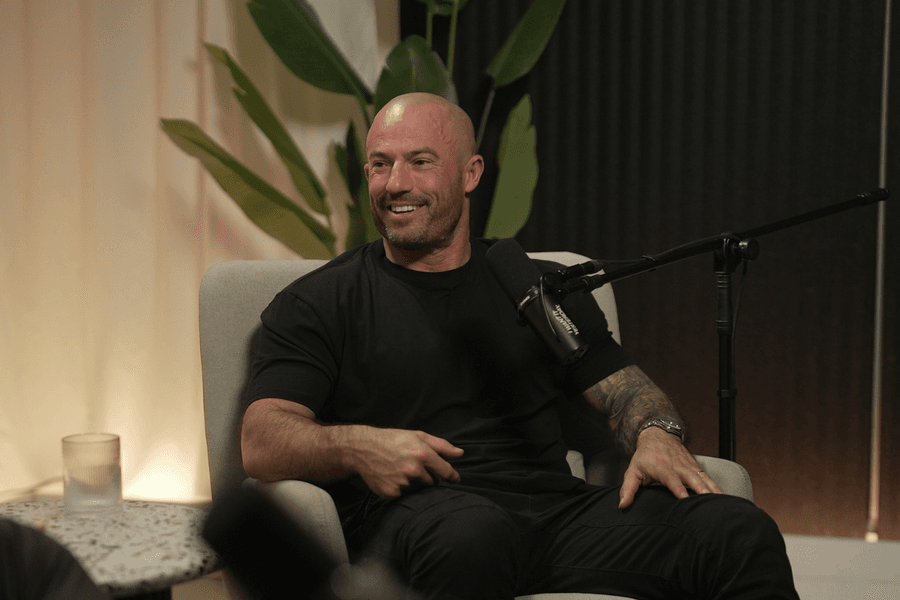
On a recent episode of the Raise the Bar Podcast, exercise and sports scientist Tony Boutagy explained that our understanding of what causes muscle growth has changed considerably. And one of the ideas we've had to reconsider is the role of muscle damage.
Why Do Muscles Get Sore?
Soreness often happens when you expose your body to something it isn't used to. A new program, a new exercise, more volume than usual, or even a movement you haven't done in a while can be enough to leave you feeling it for the next few days.
Training places stress on your muscle fibres. When that stress is unfamiliar, it causes microscopic disruption within the fibres and the tissue around them. This is known as exercise-induced muscle damage, essentially tiny disruptions happening at a scale you'd never notice with the naked eye.
Your body then gets to work repairing that damage. Inflammation increases, fluid moves into the affected tissue, and the nerve endings around the area become more sensitive. That combination contributes to the tenderness, stiffness, and discomfort we know as delayed onset muscle soreness, or DOMS.
It's also why you don't necessarily feel it during the workout. That repair response develops in the hours after you train, so you can leave the gym feeling completely fine and wake up the next morning wondering what happened.
Why Did We Think Soreness Meant Growth?
For years, muscle damage was considered one of the main drivers of muscle growth, alongside metabolic stress and mechanical tension.
The logic made sense: train, damage the muscle, repair it, come back bigger.
Our understanding has changed.
As Tony explained, muscle protein synthesis does increase after training, but that doesn't automatically mean your body is building new muscle. When there's a lot of damage to deal with, much of that activity is going towards repairing and remodelling what is already there.
This is particularly relevant in the first week or two of a new program. The exercises are unfamiliar, you're generally creating more muscle damage, and your body has a bigger repair job to do.
So you can actually be at your most sore when a lot of your body's resources are being directed towards repair, rather than building new muscle.
Why Does the Soreness Fade?
This is known as the repeated-bout effect.
Your body has adapted to the stimulus, so the same exercise doesn't create the same level of disruption each time you do it. There's less damage to repair, and the soreness tends to come down with it.
This also changes what happens with muscle protein synthesis. As Tony explained, when that repair demand starts to decrease, more of the response can contribute to actually laying down new muscle tissue.
Which creates an interesting situation. You might feel wrecked in the first week of a program because your body has a big repair job ahead of it. A few weeks later, you might be far less sore, but in a better position to actually build muscle.
So if soreness isn't what we're trying to create, what are we looking for?
What Actually Builds Muscle?
The primary driver of muscle growth is mechanical tension, the force your muscle fibres experience when they're working against resistance.
Your body doesn't recruit every muscle fibre available from the first rep of a set. It recruits what it needs to get the job done.
If you're working with a relatively light weight, the first few reps don't require every available muscle fibre. But as the set gets harder and fatigue builds, your body has to recruit more of them to keep producing force.
This is why proximity to failure is important, particularly when you're working with lighter loads.
Heavier loads recruit more muscle fibres earlier because the task demands it straight away. With lighter loads and more reps, you need to get further into the set before reaching those higher levels of recruitment.
Both approaches can build muscle. What matters is creating enough mechanical tension across the muscle fibres you're trying to develop.
And this is where judging a workout by soreness can lead you in the wrong direction.
You can create plenty of muscle damage without creating the best possible stimulus for growth. You can feel a serious burn during a set without that burn itself driving muscle growth. And you can finish a productive hypertrophy session without being particularly sore the next day.
The things that make a workout feel effective aren't always the things that are actually building muscle.
What This Means for Your Training
Soreness isn't something you need to avoid, but it isn't a scorecard for a good workout either.
If you're sore for the first week or two of a new program, that's normal. Feeling progressively less sore as you stick with it is normal too. Your body is getting used to what you're asking it to do.
And if building muscle is your goal, that's not necessarily something you want to interrupt.
Sticking with key exercises gives you time to get better at them, load them properly and generate the mechanical tension you're looking for. If you swap exercises the moment they stop making you sore, you're introducing another unfamiliar stimulus and potentially creating more damage for your body to repair.
So rather than asking, "How sore am I today?", there are probably more useful things to look at.
Are your working sets genuinely challenging? Are you getting close enough to failure? Are you progressing over time? Are you sticking with movements long enough to actually get good at them?
Soreness can tell you your muscles experienced something they weren't used to. It can't tell you how much muscle you built.
Listen to the Full Episode
In the full episode of Raise the Bar with Tony Boutagy, they also get into why more sets doesn't mean more muscle, what actually drives strength versus hypertrophy, why the post-workout pump is mostly water, and how long you've really got before you start losing muscle you've built.
Listen on Spotify, Apple Podcasts, and YouTube.
TL;DR
(Too long, didn't read)
- Soreness is often a response to something unfamiliar, like a new exercise or increased volume.
- Being sore doesn't mean you've built more muscle. Your body may be busy repairing damage.
- Getting less sore doesn't mean your training has stopped working. It usually means you've adapted.
- Mechanical tension is the primary driver of muscle growth, not soreness.
- Don't chase soreness. Focus on challenging sets, progression and consistency.
For now, it’s your turn.
Want this straight to your inbox? Sign up to the OneCoach Weekly to get practical tools and tips to take your training, health and wellbeing to the next level.
And as always, if you need some support to make that happen, our coaches are ready to help. Enquire here.