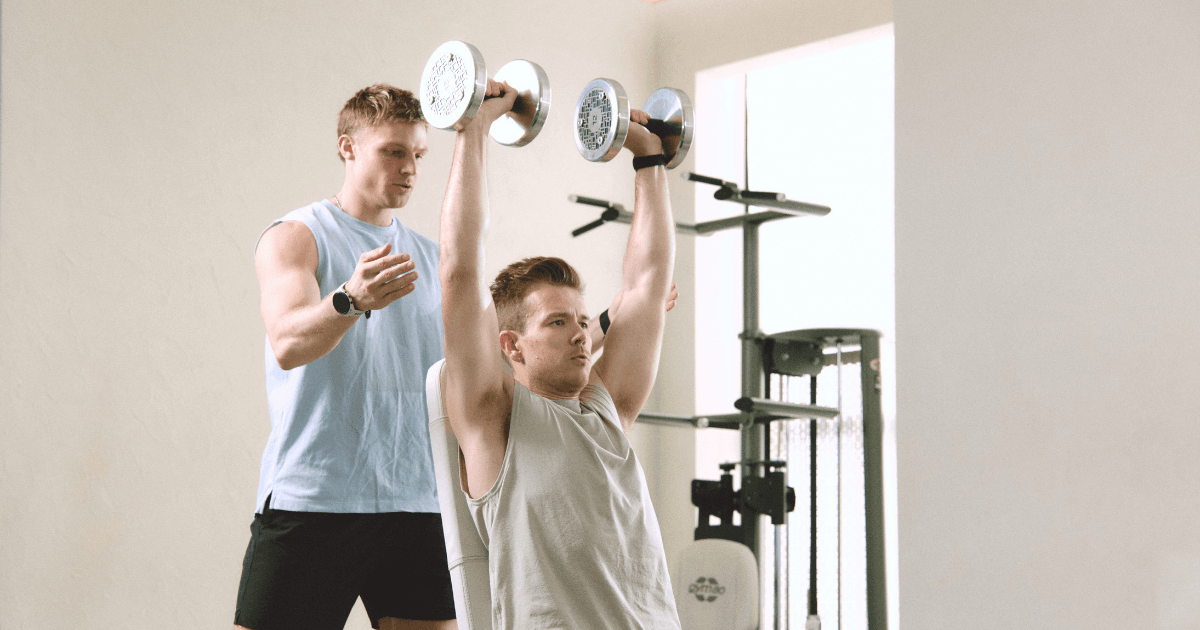
If you could only choose one in your 20s, would you rather be really strong or really fit?
For exercise physiologist Rob Lyon, the answer changes depending on your age.
In your 20s, he would lean towards cardiovascular fitness. Build a strong aerobic base early, and you have more fitness to carry forward and maintain as you get older.
Later in life, he places greater emphasis on strength, as preserving muscle and physical capacity becomes increasingly important.
That doesn’t mean doing cardio now and waiting until you’re older to pick up a weight. Both belong in your training throughout adulthood. Rob’s perspective is about how the emphasis can change.
Why does Rob lean towards cardio in your 20s?
Cardiovascular fitness generally declines with age, with the rate of decline tending to accelerate later in life. Building your fitness early gives you a stronger starting point, but maintaining it still requires ongoing training
That’s the thinking behind Rob’s answer: use your younger years to establish an aerobic foundation you can continue developing and maintaining.
The benefits aren’t all decades away. Rob explains that a stronger aerobic base can support recovery between hard efforts and your ability to handle repeated work.
So even if your current goals are lifting heavier, training for HYROX or performing better in the gym, aerobic fitness deserves a place alongside your strength work.
Why will you want good cardiovascular fitness as you age?
Think about what you want to keep doing when you’re 60, 70 or beyond.
Travelling. Walking up hills. Playing with your grandchildren. Getting through a busy day without feeling exhausted.
Rob encourages us to consider fitness in terms of those everyday capabilities, as well as performance in the gym.
This is where the distinction between lifespan and healthspan comes in. Lifespan is how long you live. Healthspan is how much of that time you spend in good health.
Training gives you a way to work towards the physical capacity you want in those later years. Your 20s might feel early to think about it, but they’re an opportunity to start building habits you can carry forward.
Why does strength become more important as you get older?
Preserving muscle, strength and physical function becomes an increasingly important part of training as you age.
The goal might shift from lifting a personal best to carrying shopping, getting up from the floor or managing stairs confidently. Strength training supports those capabilities. Alongside functional balance work, it also forms part of exercise programmes aimed at reducing falls.
This helps explain why Rob’s answer changes with age. He leans towards developing aerobic fitness early, then places greater emphasis on preserving strength later.
It’s a shift in emphasis, rather than a reason to stop training either quality.
Does that mean you should only do cardio in your 20s?
No. Prioritising something doesn’t mean training it exclusively.
Guidelines recommend both aerobic activity and muscle-strengthening exercise for adults, including younger adults.
Your current training also changes what deserves more attention.
If you lift four or five days a week but do almost no cardiovascular training, another strength session might not address the biggest gap in your fitness.
If you already do plenty of cardio but no resistance training, strength work deserves a place in your routine.
Rob’s hypothetical choice is a useful prompt to look at that balance. What have you been developing, and what have you been leaving out?
How do you build cardiovascular fitness alongside strength?
Start by choosing an aerobic activity you can do consistently.
Walking, cycling, rowing and other forms of aerobic exercise offer different ways to train, depending on your current fitness, preferences and goals. You don’t have to become a runner to make room for cardio.
Then give those sessions a clear purpose. In the episode, Rob highlights the mistake of making easy sessions too hard and hard sessions insufficiently challenging. Easier aerobic work and harder efforts each have a role.
If you’re unsure how to structure them, our guide explains aerobic base training, heart-rate zones, VO₂ max and how to progressively improve your cardiovascular fitness.
Read More: How to Get Fitter: Stop Guessing, Start Improving.
So, should you focus on getting fitter or stronger in your 20s?
If forced to choose, Rob would lean towards getting fitter. In practice, you can train both.
If you already lift regularly but rarely train your cardiovascular fitness, his perspective gives you a reason to address that gap.
Keep building strength, make room for aerobic work, and adjust the balance as your goals and needs change.
Listen to the podcast
Exercise physiologist Rob Lyon has spent more than 20 years working across exercise physiology and cardiology.
On Raise the Bar, he explores cardiovascular fitness, strength, healthspan and how the fitness you build now can influence your health and physical capacity as you get older.
Find it on Spotify, Apple Podcasts, and YouTube.
TL;DR
(Too long, didn’t read)
- If forced to choose in your 20s, Rob would prioritise cardiovascular fitness.
- Cardiovascular fitness tends to peak around your 30s before declining, so building a strong aerobic base earlier gives you more to maintain later. A stronger aerobic base can also improve recovery between hard efforts and support your training performance now.
- As you get older, strength training becomes increasingly important for maintaining muscle mass, strength and physical capacity.
- Prioritising cardio in your 20s doesn’t mean ignoring strength. Both should be part of your training.
- The balance between strength and cardiovascular fitness can shift as you age and your needs change.
Now, it’s your turn.
Want this straight to your inbox? Sign up to the OneCoach Weekly to get practical tools and tips to take your training, health, and wellbeing to the next level.
And as always, if you need some support to make that happen, our coaches are ready to help. Enquire here.