We get it, you make the effort, you go to the gym, you want to see progress on the other side.
But it’s not as simple as effort in, reward out.
Most of the time, it’s not a consistency problem; it's a direction problem. And it comes down to one thing: training hard isn't the same as training specifically.
It’s like memorising a lot of random words and hoping you’re going to be able to perform a speech. The words are there, the effort went in. But without the right structure behind them, they don't add up to what you need.
The SAID Principle: Specific Adaptation to Imposed Demands
There’s a key principle that sits underneath all of this: SAID. Specific Adaptation to Imposed Demands.
It means exactly what it says. Your body adapts to the specific demands you place on it. It gets good at what you practice. It changes in the direction you train it.
Let’s say you only did bicep curls with your right arm for a year. The right bicep would grow. The left would not. Only the muscle being challenged gets the result.
Zoom out, and it applies to everything. The sets, reps, tempo, load and rest periods you choose within your training need to be specific to the change you’re trying to make. And the better you get, the harder it is to get better. The further you want to go, the more specific the training needs to become.
There’s no shortcut around this. General effort produces general results. Specific stimulus produces specific adaptation.
A Goal is a Series of Adaptations
If you break down a fitness goal, what you’re actually describing is a series of biological adaptations.
Wanting to be stronger
means wanting your nervous system to recruit muscle fibres more efficiently, and your muscles to grow in size and capacity.
Wanting to be leaner
means wanting a shift in body composition, which requires protecting muscle mass while creating a calorie deficit.
Wanting to run faster
means wanting cardiovascular efficiency, neuromuscular coordination, and muscular endurance to all improve at once.
If your goal involves multiple adaptations or you want to chase multiple goals at once, it’s important to be aware that the more adaptations you pursue at the same time, the more training stimuli are required, and therefore the more the adaptations compete with each other.
Your body only has a finite amount of resources available to produce progress. So you have to make a deliberate decision on where to use those resources.
Heavy strength training and high-volume endurance work, for example, send opposing signals to the body. They’re not impossible to combine, but they do create interference, slowing progress in both directions.
Yes, concurrent training does exist, but it makes it harder to move any one goal forward. You can keep a base of other adaptations, but a training phase works best when you have fewer competing adaptations.
So when it comes to your goal, look at the deeper layers:
- What is the adaptation you require to hit that goal?
- What stimulus do you need to create that adaptation?
- What options do you have to achieve those stimuli?
And that becomes the shape to build your training program around: one that’s specific and effective.
How Training Phases Work
A training phase is a block of time, usually four to twelve weeks, where you commit to one primary adaptation as your focus. That doesn’t have to mean abandoning everything else, but you’re accepting that this is what you’re driving forward right now. Everything else is in maintenance.
Think of it like steering a car. You can absolutely change direction, you just can’t go north and west at exactly the same time.
A typical sequence for someone building general fitness might move through something like this:
Phase 1: Foundation and Movement Quality
Before anything else, you need to move well. This phase is about building the capacity to train effectively, learning the patterns, finding the range of motion, and establishing technique. It’s not the most glamorous phase, and one that a lot of people skip. But it’s also the one that determines your ceiling, and if you don’t have a solid foundation to build on, you’ll find yourself getting injured or unable to push to the intensities needed at a later stage.
Phase 2: Hypertrophy
The muscle-building phase is one many people either rush through or underestimate. More muscle creates more potential for most goals, whether that’s strength, body composition or performance. Volume is high here, loads are moderate, and the goal is tissue growth.
Phase 3: Strength
Applying heavier loads to the muscle you’ve built. Lower reps, longer rest, higher intensity. This is where the foundation and hypertrophy phases pay off. Without them, strength training on an underprepared body increases injury risk and limits how far you can go.
Phase 4: Maintenance or Transition
Keeping what you’ve built while shifting focus, maybe toward a new performance goal, a new phase, or simply sustaining results through a busy period of life.
You keep cycling through. You come back around, and each time you do, the starting point is higher than it was the last time because each phase builds on the last.
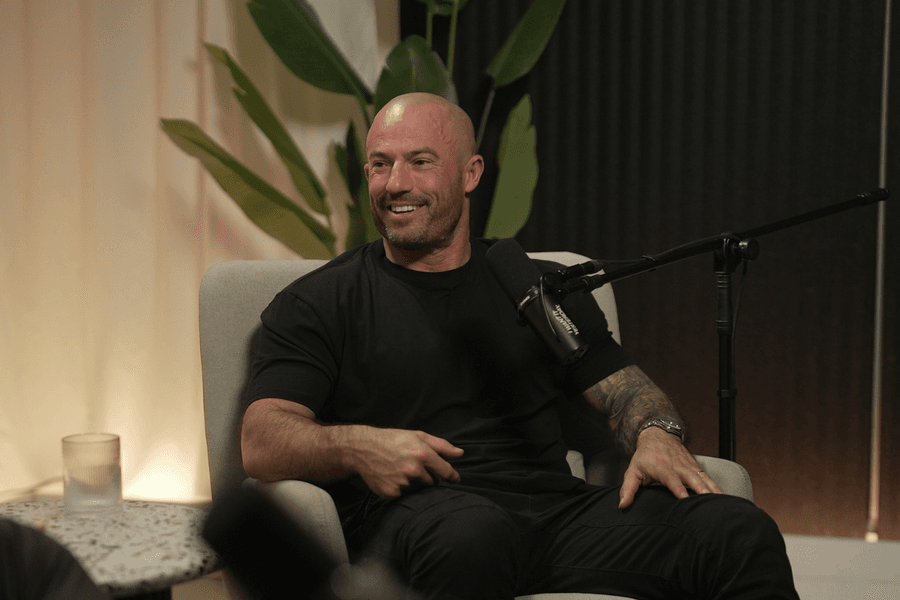
In an upcoming podcast (that’s a OneCoach Weekly exclusive teaser!), Sebastian Oreb, the Australian Strength Coach and coach to the strongest man alive, talks us through the 16-week cycle of 4 phases with his clients:
- Weeks 1-4: Familiarisation. Learn the movements. Build rapport. I ask what you like doing and we start there. You can't expect effort from someone who hates every session.
- Weeks 5-8: Hypertrophy phase (or "work capacity"). Higher volume, 8-12 rep range, exercises chosen for muscle building rather than pure performance.
- Weeks 9-12: Strength phase. 3-6 rep range. We start loading the specific movement patterns we'll be testing.
- Weeks 13-16: Peaking. Teaching the skill of a heavy single. Understanding what it feels like to give everything to one set. On week 16, we test.
That gives you three rounds per year, enough to see progress, not so frequent that testing becomes the training.
Stay tuned for more from Sebastian!
So, Where do You Start?
Understanding phases is one thing. Knowing where to enter the sequence is another.
It depends on your goal, and more specifically, what your goal actually requires.
If Strength is your Goal
Strength needs heavy load, lower reps & longer rest as the stimulus. But you don’t start by lifting as heavy as possible. You start by moving well, then building the muscle mass that gives strength training something to work with, and then applying the specific strength stimulus. Skipping straight to a heavy load without the foundation underneath lowers the ceiling on your potential and is also probably the fastest route to injury.
If Fat Loss is your Goal
The primary stimulus is a negative energy balance. You need to be expending more calories than you’re taking in. But the mistake people make is thinking that just means moving more and eating less. Without adequate muscle mass, you’re going to require a very low number of calories to achieve this. Muscle mass increases your metabolism, meaning you burn more calories at rest. Therefore, you can lose weight without only eating an unpleasantly low amount of food. Building and maintaining lean muscle is part of the fat loss mechanism, not just a nice-to-have.
If Performance is your Goal
If performance is your goal, such as a race, sport or event, your phases typically work in reverse from the goal date. Build your base, develop your capacity, then peak your specificity as the event approaches.
In all cases, when you know what you want to achieve, ask yourself, “What adaptations do I need to create and in what order?”
Put It Into Practice
Your training sequence, at its most stripped back, looks like this:
Goal > Adaptation > Stimulus
Work out what you’re actually trying to change. Understand the adaptation that creates that change. Apply the stimulus that drives that adaptation. Do it for long enough, with enough focus, that your body has a reason to respond.
Over the next few weeks, we’ll go deeper into each of the main goals - bigger, stronger, fitter, leaner, faster - so you know exactly how to approach whichever one you’re chasing.
But first, we’ll tackle the question a lot of you might already be thinking: Can you chase multiple goals at once? The answer is more nuanced than yes or no, and it comes with a proper framework for making it work.
Because even if you nail your focus, the right goal with the wrong tools still won’t work.
And if working out where to start, or how to sequence it, is the part that feels murky, that’s exactly what a coach is for. It’s what we do every day. Enquire here.
TL;DR
(Too long, didn’t read)
- The SAID principle: your body adapts specifically to the demands you place on it. General effort produces general results.
- Your body has a finite adaptation resource. The more directions you pull it in simultaneously, the more progress slows in each.
- A training phase is a focused block of 4-12 weeks committed to one primary adaptation. Focus creates faster, clearer progress.
- A sensible sequence for most people: movement quality > hypertrophy > strength > maintenance. Each phase builds the foundation for the next.
- The question isn’t “what do I want to achieve?” It’s “what adaptation do I need, and what do I need in place first?”
- Progress in fitness is cumulative, not linear. Each phase raises the floor for the next one.
Want this straight to your inbox? Sign up to the OneCoach Weekly to get practical tools and tips to take your training, health and wellbeing to the next level.
And as always, if you need some support to make that happen, our coaches are ready to help keep that discipline strong. Enquire here.