Have you ever compared yourself to someone online and wondered why something looks easy for them - the 5am workout routine, the perfectly portioned meals, the immaculate house - and yet it feels impossible for you?
We assume that if we have the right training and nutrition plan, we’re going to get results.
But if that was true, everyone with a computer would be jacked and shredded.
In reality, there’s a lot more to it. So much so that there’s an entire model that describes it.
The Biopsychosocial Model
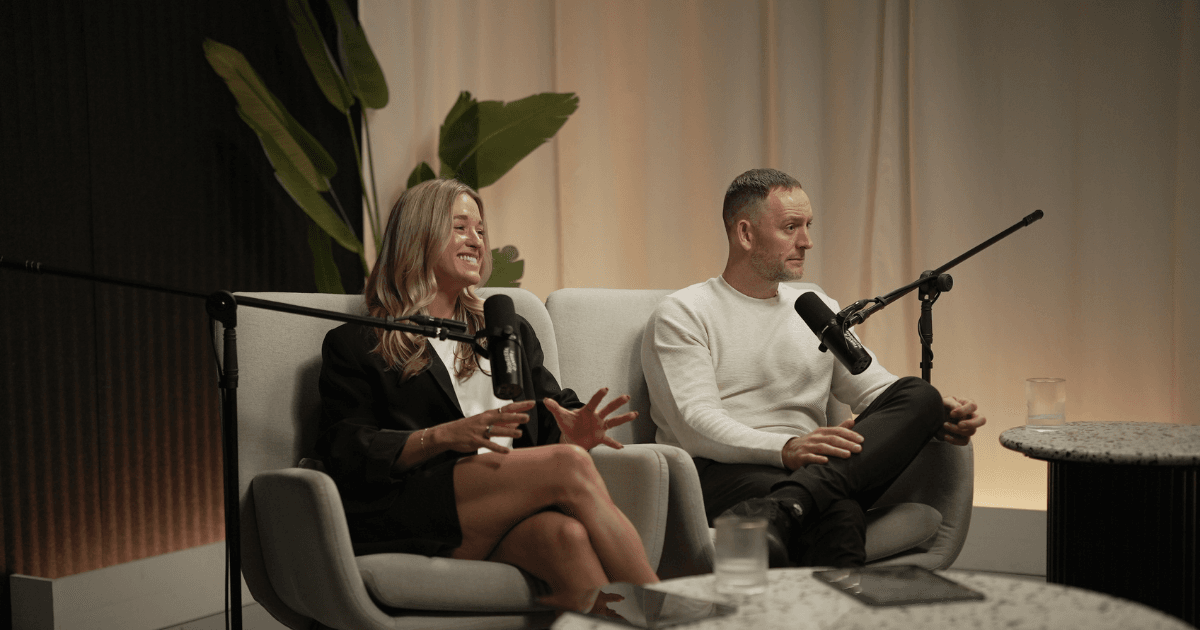
I was introduced to the biopsychosocial model in the first episode of Raise the Bar, a brand new podcast from One Playground and OneCoach, hosted by Matt Duncan and Ariel Comeau.
Guest Shona Vertue, expert coach and psychology graduate, explains how the Model, developed in the 1970s by psychiatrist Dr George Engel, was one of the first to suggest that our wellbeing isn’t just influenced by our biology, and in fact our psychology and our social environment play a part too.
- Biology: Physical Health, sleep, nutrition, injury, fitness
- Psychology: Thoughts, feelings, stress, confidence, beliefs, habits
- Social: Relationships, work, finances, money
Right now you might be thinking “Yes, that’s obvious”. But I can almost guarantee that you’ve thought:
"I know what to do, so why am I still not doing it?"
Traditional approaches often assume that if you have the right information, you'll get the right result. The biopsychosocial model recognises that behaviour is more complicated than that.
For example:
- You know you should exercise, but you're exhausted because your baby kept you awake (biology).
- You're afraid of failing because you've tried before (psychology).
- Your work schedule leaves you no time to train (social).
The issue isn't a lack of knowledge. It's that multiple factors are interacting.
Using the biopsychosocial model
For me, the ideas behind the model helped me to deal with a hamstring injury that never quite healed, and despite all the rehab and hamstring curls, I couldn’t quite fix. It wasn’t until Matt, my coach, took a moment to zoom out and look at the entire situation - we realised that I wasn’t managing stress or creating space to allow the injury time to heal. The biology was impacted by the psychological and social.
The model can help in a range of other ways too.
It removes the guilt. Struggling doesn't automatically mean you're lazy or lacking willpower.
It provides better solutions. Instead of asking, "What's wrong with me?" you ask, "Which factors are getting in the way?"
It leads to lasting change. Addressing sleep, mindset, habits, relationships, and environment often has a bigger impact than simply changing the workout or diet.
It feels personal. Rather than applying the same solution to everyone, it recognises that every person's circumstances are different.
Zoom Out Before You Zoom In
We are interesting and complex humans, and aspects of our lives and wellbeing are heavily intertwined.
Your results are not determined by your workout alone. They're shaped by your body, your thoughts, and your environment. When all three are working together, change becomes much easier.
But you can't change what you're not aware of. So take the time to zoom out before you zoom in. Use the biopsychosocial model to help steer your reflection, and start to understand what biological, psychological or social factors might be at play.
Sometimes the answer is exactly where you expect it to be. Sometimes it's somewhere you hadn't thought to look.
Listen to the Podcast
Raise the Bar, a podcast from One Playground and OneCoach, is a place for honest conversations about the complexities of health, fitness, and high performance.
Hosted by Matt Duncan and Ariel Comeau, it exists to give you the practical tools and mindset shifts to close the gap between where you are and where you want to be.