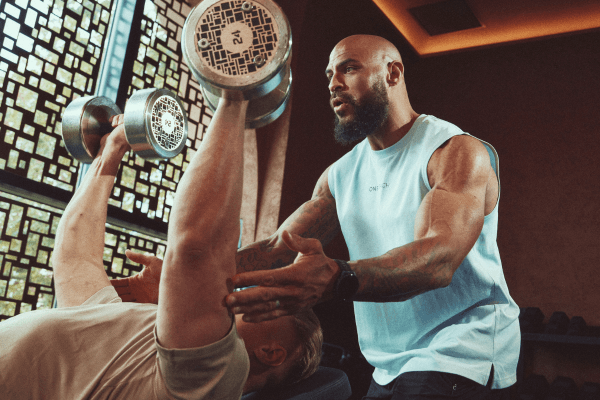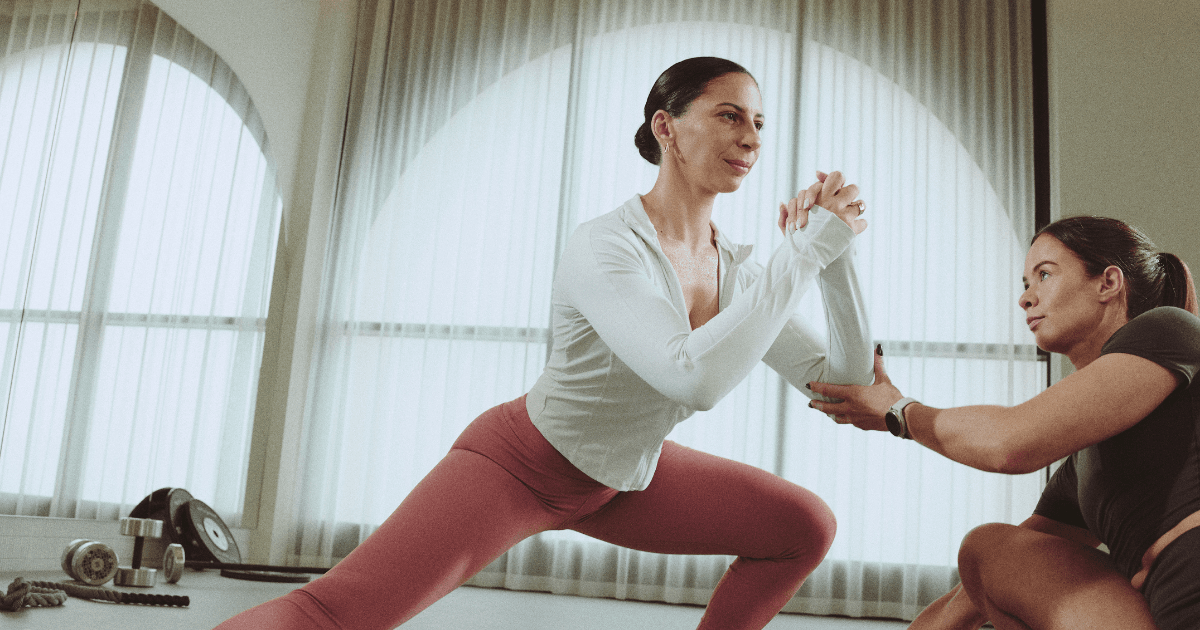
When people think about becoming a personal trainer, the picture in their head tends to be a fairly specific one: one client, one hour, on the gym floor. Multiply that by however many sessions fill a week, and that is the job.
That picture might be somewhat accurate for the early stages of a coaching career, and there is nothing wrong with it. But it represents one small corner of what a career in fitness can actually look like for someone who builds their skills, develops their expertise, and thinks about where they want to go over time.
If you’re drawn to coaching but are not sure whether it can sustain a long-term career, this article is for you. Discover where a career as a coach could take you.
The First Two Years Shape Everything that Follows
The coaches who build successful careers that continue to maintain interest share a few things in common.
- They develop deep technical competence early, not just enough to pass a course but enough to get real results with a wide range of clients.
- They invest in their communication and relationship skills, which turn out to matter far more than most people studying fitness anticipate.
- They treat their early years as an apprenticeship rather than an endpoint, actively seeking out environments where they are surrounded by coaches who are better than them.
The qualification opens the door; everything that follows depends on what you do with it.
Where Coaching Can Take You
Specialisation
The broadest shift in most coaching careers is the move from generalist to specialist. Early-career coaches tend to work with whoever walks through the door, which is exactly right for developing range and building confidence. Over time, many coaches find that a particular type of client or goal draws them in, and they begin to develop specific expertise in that area.
Common specialisations include:
- Strength and conditioning
- Pre- and post-natal training
- Rehabilitation and injury management
- Sport-specific performance
- Aging populations
- Ntrition-integrated coaching.
Each of these represents a distinct body of knowledge, a specific client base, and a different kind of career. Coaches who specialise well tend to attract clients more easily, retain them longer, and command higher rates than those who remain generalists indefinitely.
Head coaching and education roles
Coaches who combine strong technical skills with the ability to communicate clearly and lead others often move into head coaching or education roles, working within facilities to develop junior coaches, deliver internal training programs, or set the standard for how coaching is delivered across a team.
This path suits coaches who find as much satisfaction in developing other coaches as in working directly with clients. It is also a path with genuine commercial upside; experienced head coaches in premium facilities earn salaries that sit well above the floor of the personal training market.
Program design and group training
Some coaches move away from exclusively one-on-one work and develop careers built around small group training, semi-private sessions, or bespoke programming. These models can be more financially efficient than individual PT, since the same preparation and delivery time serve multiple clients, and they suit coaches who have developed a strong methodology they want to deliver at scale.
Corporate wellness
Organisations investing in employee health represent a growing and often overlooked part of the fitness market. Corporate wellness work ranges from delivering on-site group sessions to managing company-wide fitness programs to consulting on workplace health strategy. It suits coaches who are comfortable in professional environments, prefer structured scheduling over the unpredictability of a private client book, and want to work with clients who are motivated by factors beyond aesthetics.
Online coaching
Online coaching has matured significantly and now represents a legitimate full-time career for coaches who develop a clear methodology and the ability to communicate it effectively without being in the room. It removes the geographic ceiling on who you can work with, allows coaching to scale beyond the hours physically available in a day, and suits coaches who want location flexibility or who have built a specialism with national or international demand.
Facility ownership and management
For coaches who develop a business instinct alongside their coaching skills, ownership or management of a facility is a natural progression. This is a genuine business venture with all the complexity that comes with it, but it draws directly on every skill developed across a coaching career, client relationships, program design, team management, culture building, and can represent the most significant financial upside available in the industry.
The Common Thread
What connects all of these paths is that none of them are accessible from day one, and all of them are accessible to coaches who build the right foundation and stay intentional about their development over time.
The coaches who end up in interesting, well-compensated, genuinely satisfying roles are almost always the ones who treated their early years seriously. They chose their first environment carefully, sought out mentorship actively, and kept developing their skills beyond the minimum required to do the job.
The Elevated Coach Program at One Playground is built specifically for this early period, a salaried, mentored pathway for Certified Coach graduates that puts you inside a high-performing coaching team from day one, with the kind of development that compresses years of on-the-job learning into months.
What this Means for the Decision to Study
If you are weighing up whether a career in personal training is worth committing to, the right question is not whether the job itself is enough. It is whether the foundation it provides is worth building on.
For coaches who approach it properly, personal training is a foundation with significant range. It develops skills in human behaviour, communication, performance, and business that translate into a wide variety of paths over the course of a career. The entry point looks like one client, one hour, on the gym floor. Where it goes from there is largely up to you.
If you are ready to take the first step, learn more about Certified Coach or register for a free Coaching as a Career Night.