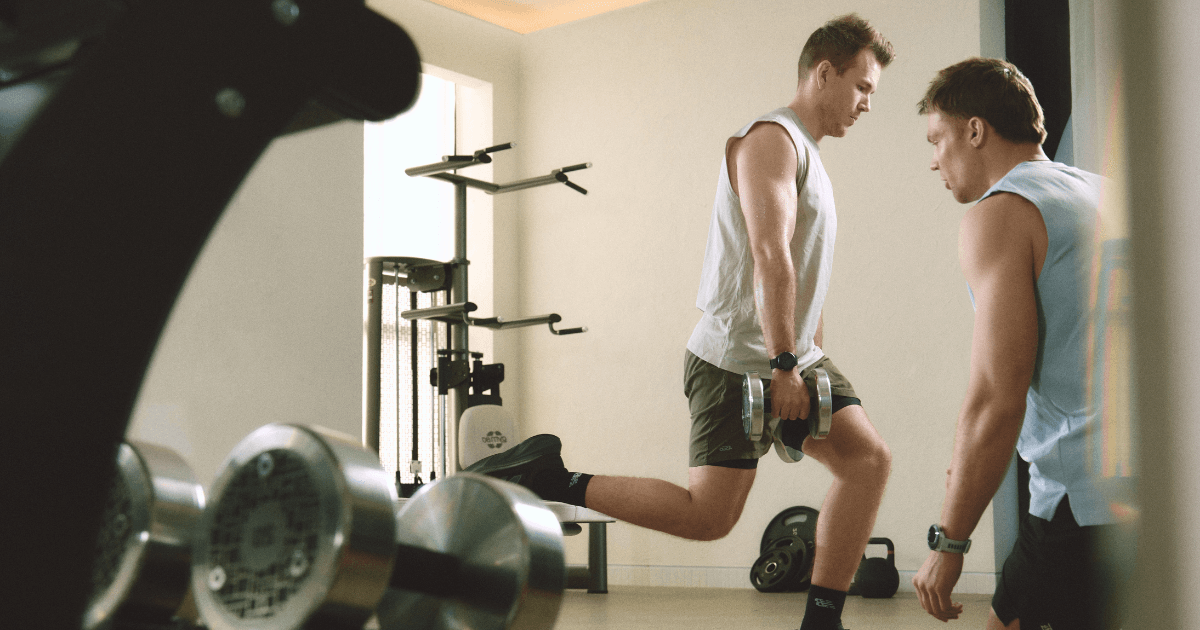
Ever since I can remember, my mum has told me to "change my state" when I'm stressed or anxious. Nothing complicated. Get up, move somewhere else, go for a walk. Just shift from wherever I am into something different.
And it usually works. I come back calmer, clearer, and actually able to deal with whatever I'd been stuck on.
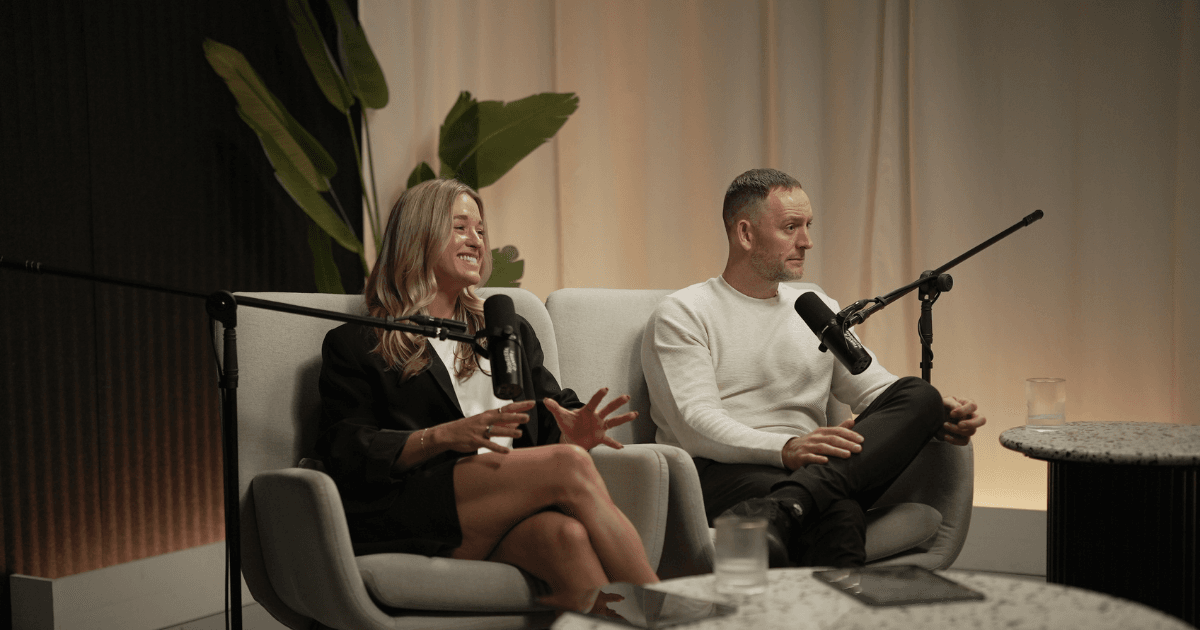
I found myself thinking about that while listening to Nic Montforte's episode of the Raise The Bar Podcast. Nic is an executive health coach, author of Infinite Capacity, and creator of a framework she calls the Stress Debt Economy. On the episode, she explains what happens when stress keeps accumulating without enough recovery and why doing something physical can be one of the quickest ways to change how you feel.
I'd never thought much about why Mum's advice worked. Nic's explanation gave me a reason: changing what I was doing physically helped me get out of that stressed state.
Stress itself isn't the problem. It's a normal part of being human and, in the right dose, can sharpen focus and prepare us to act. The problem is when the demands keep coming faster than we recover from them.
Today we’re looking at both sides: what you can do when the stress response has already kicked in, and what can help stop it from building quite so quickly in the first place.
At What Point Does Stress Stop Being Useful?
Stress hormones exist for a reason. Adrenaline and cortisol help prepare the body to respond to a challenge. Your heart rate might rise, your attention narrows, and energy becomes more readily available, ready to act on whatever threat is in front of you.
The stress response isn't reserved for physical danger, either. A difficult email, an argument, a looming deadline, or even the anticipation of a threat can be enough to trigger it.
And while stress hormones don't simply sit in your body waiting to be "used up", repeated stress without enough recovery can take its toll.
Nic talks about her Stress Debt Economy model. Think of an overdraft: you spend $100, but only pay back $80. Then you spend another $100, and pay back $80. This keeps going over and over. While at first, the debt is only $20, if you continue to spend more than you pay back, over time, the debt will build up. Eventually you’re forced to pay something back.
Stress works in a similar way. The more you build, the more of an impact it will have
What to do when the stress response has already kicked in
You probably know the feeling of when the stress response has started in your body. Something happens, and suddenly your heart is racing, your body feels tense, or you can't sit still. Your stress response has kicked in, even if there's no physical danger in front of you.
This is where Nic argues that doing something physical can be more useful than immediately trying to reason your way out of how you feel.
During some of her most burnt-out years, her own version was sitting in her car after work and screaming until she felt she'd got everything out, before walking inside to be present with her kids.
You don't necessarily need to scream in your car. There are other simpler tools you can use.
1. Give the stress response something physical to do
When your stress response kicks in, hormones, including adrenaline, prepare your body for action. Your heart beats faster, more blood is directed towards your muscles, and your body gets ready to move.
So, move.
Go for a brisk walk. Shake out your arms and legs. Do twenty fast air squats. Run up the stairs. Punch a bag. It doesn't need to be a workout, just enough movement to give all that physical activation somewhere to go.
2. Give your brain something else to focus on
Another option is to interrupt the loop by giving your brain a task that requires your attention.
One of Nic's examples is simple: bounce a ball against the ground using your non-dominant hand for a minute.
It's difficult enough that you have to concentrate on what you're doing. For that minute, your attention shifts away from the email, conversation, or thought you've been replaying and onto the task in front of you.
Anything that requires a little coordination and concentration can serve a similar purpose.
3. Change what's happening physiologically
The third option is to give your body a different physiological signal, one associated more with calming, safety, or connection than threat.
Different techniques do this in different ways.
- Splashing cold water on your face can trigger the diving reflex, which slows your heart rate.
- A physiological sigh, two inhales through the nose followed by a long exhale through the mouth, can help bring heightened arousal down.
- Physical contact with someone you trust, like a long hug, is associated with the release of oxytocin and can help dampen the stress response.
- Even talking to someone you feel safe with can help. Social connection itself can change how the brain and body respond to stress.
Nic's experience is that once she's done something physical, the clarity tends to follow. Instead of trying to solve a problem while her body is still highly activated, she can come back to it in a better state to respond.
How to stop so much stress from building up in the first place
Changing your state can help when the stress response has already kicked in. But ideally, you don't want to spend your entire day doing air squats every time another email lands.
Some stress is unavoidable. Some of it, though, comes from the way we've set up our days: constant notifications, back-to-back meetings, too many things being held in our heads, and very little space between one demand and the next.
So, before reaching for another stress-management technique, look at where you can remove some of the stress in the first place.
A few places to start:
- Find the stressors that keep repeating. If the same meeting, deadline, conversation, or part of your routine stresses you every week, ask whether anything about it can actually change. Sometimes the answer isn't managing your response better. It's fixing the thing that's causing it.
- Get things out of your head. If you're repeatedly thinking about what you need to remember, write it down somewhere you trust. The task still exists, but you don't need to keep mentally rehearsing it.
- Know when you're easiest to tip over. Maybe it's when you're hungry, underslept, running late, or six meetings into the day. You won't eliminate those situations completely, but knowing your patterns gives you a chance to plan around them.
- Give your brain some time without new inputs. You don't need to fill every spare minute with email, news, podcasts, or scrolling. A walk without your phone, ten quiet minutes in the morning, or simply doing nothing on the train home gives you a break from adding something else to process.
- Remove unnecessary stimulus. Not everything needs your attention the second it happens. Decide when you'll check messages rather than letting every ping interrupt whatever you're doing.
While none of these will immediately make life stress-free, they're small ways of reducing how many demands you're asking your brain and body to deal with in the first place. Then, when the unavoidable stress does arrive, you're not necessarily meeting it with an already full stack.
The quick fixes help, but the bigger picture is important
Stress is useful. You need it.
But if you're chronically overwhelmed, approaching burnout, or dealing with sustained pressure, twenty air squats and fewer notifications can only do so much. At some point, you have to address what's creating the stress, whether that means having a difficult conversation, asking for help, changing your circumstances, or getting professional support.
Managing your response is important. So is addressing what you're responding to.
Which brings me back to my mum.
"Change your state" wasn't a complicated stress-management framework. It was simply a way to interrupt the stress response and get out of my head for a moment.
Sometimes that's exactly what you need. Get up. Move. Change your physical state.
Then come back to the problem.
Turns out Mum had a point.
TL;DR
(Too long, didn’t read)
Listen to Nic on the Raise the Bar Podcast.
- Stress is a normal response designed to help us deal with challenges
- Problems arise when stress keeps accumulating without enough recovery
- Movement can be one of the quickest ways to change how you feel once the stress response has kicked in
- Small physical interventions can help bring your body back towards a calmer state
- Some everyday stress comes from things we can change, from constant notifications to back-to-back demands
- Managing stress means both recovering from it and reducing what unnecessarily gets added to the stack
Now, it’s your turn.
Want this straight to your inbox? Sign up to the OneCoach Weekly to get practical tools and tips to take your training, health, and wellbeing to the next level.
And as always, if you need some support to make that happen, our coaches are ready to help. Enquire here.