When you start looking into personal training courses in Australia, one of the first decisions you face is whether to study online or in person. Both options can lead to the same nationally recognised qualification, both are widely available, and the price difference between them can be significant enough to make online study feel like the obvious choice.
However, the format you choose shapes more than just how you study. It shapes how prepared you are when you finish. This article walks through both options honestly, covers the questions worth asking before you commit, and helps you figure out which approach suits where you are and what you are trying to build.
Are online PT qualifications legitimate in Australia?
Yes, as long as the provider is a Registered Training Organisation, the Cert III and Cert IV in Fitness are both part of the Australian Qualifications Framework, and an accredited RTO can legally deliver them in any format, including fully online. The qualification on your certificate is identical regardless of how you studied.
The thing to verify before enrolling anywhere is the RTO registration number. Every accredited provider in Australia has one, and you can check it through the national register at training.gov.au. If a provider cannot produce an RTO number, the qualification they offer will not be recognised by gyms, insurers, or industry bodies.
Beyond accreditation, the quality of what you actually learn varies enormously between providers, and format plays a significant role in that.
How the two formats compare
Online personal training courses: what you are actually signing up for
Online PT courses deliver theory modules through a learning portal, typically at your own pace. You work through units on anatomy, program design, nutrition, health screening and so on, complete written assessments, and accumulate the knowledge component of the qualification from wherever you have an internet connection.
The practical hours requirement, which is a mandatory component of any accredited PT course, is where online study becomes more variable. Most online providers require you to arrange your own practical placements or complete supervised hours with friends, family, or whoever you can find willing to be assessed on. The quality and consistency of that experience depend almost entirely on you.
Who online study suits
Online study works best for people who are already embedded in a fitness environment and primarily need the formal qualification to sit alongside existing practical experience.
Someone already working in a gym in an unqualified capacity, for example, or a competitive athlete who has spent years training under qualified coaches and has significant embodied knowledge, may find that the online format fills the theoretical gaps without asking them to sit through practical experiences they have already accumulated elsewhere.
It also suits people with genuine constraints on availability, where a fixed day commitment every week is simply unworkable, and where flexibility is a non-negotiable rather than a preference.
The limitations
The significant limitation of online study is what happens when you graduate and walk into a session with someone who has no training background, no body awareness, and a nervous relationship with exercise.
The theory you studied tells you what a movement assessment is. It tells you what to look for. What it cannot give you is the hours of practice reading how different bodies move, building the confidence to coach someone through discomfort, and developing the client communication skills that only come from being in front of real people repeatedly.
Plenty of online graduates find their first year in the industry harder than it needed to be for exactly this reason. The qualification gets them in the door. The experience gap shows up once they are inside.
In-person personal training courses: what you are actually signing up for
In-person courses typically combine online or self-directed learning for theory with structured face-to-face practical sessions, often delivered weekly or fortnightly. The better programs integrate real client work directly into the curriculum rather than leaving practical hours as something you sort out on your own.
The trade-off is commitment. In-person study requires showing up on a fixed schedule, which demands more planning around existing work or family responsibilities. It also tends to cost more, reflecting the infrastructure, supervision, and resources involved in delivering hands-on education properly.
Why the practical component matters more than most people expect
Personal training is a physical, relational, real-time profession. You are reading someone's body, responding to how they move, adjusting your approach based on what you observe in front of you, and managing the emotional dimension of helping someone change something they care about. Those skills develop through repetition in real environments, under supervision, with feedback. They do not develop through modules.
The gap between a graduate who has spent months coaching real people and one who has not becomes obvious quickly, both to employers and to clients. Facilities that take hiring seriously know the difference, and the graduates who build their client base fastest in their first year are consistently the ones who came out of their course having already done the job.
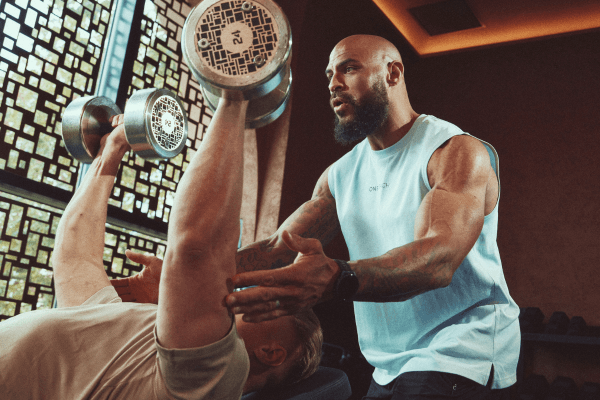
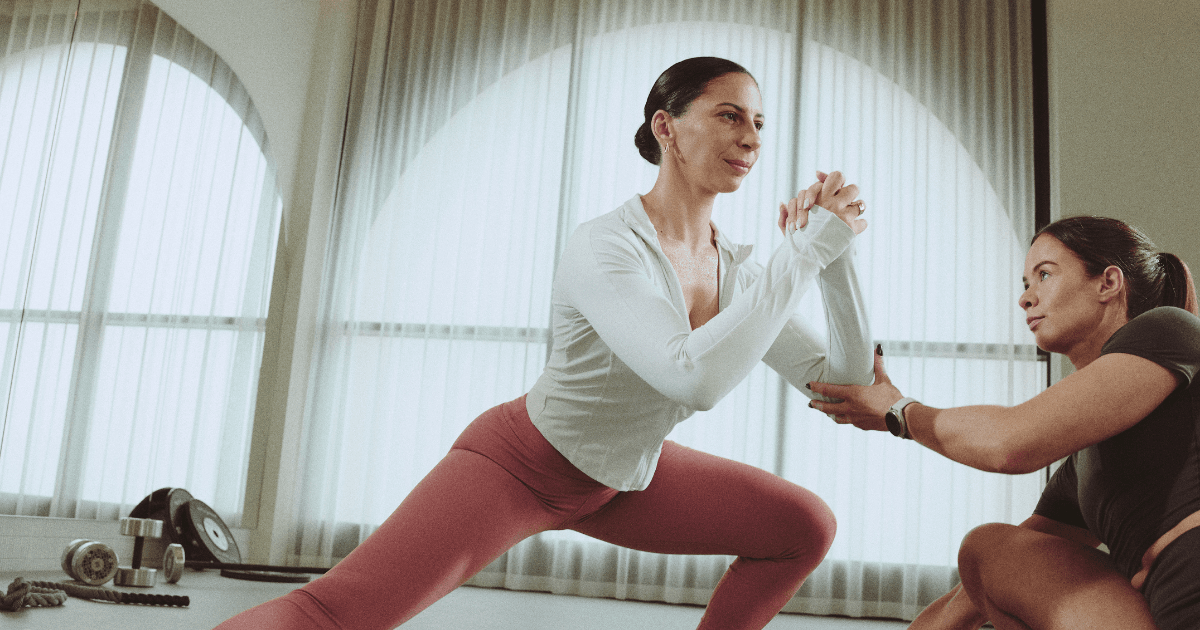
At OneCoach Academy, the Coaching Clinics sit at the centre of the Certified Coach program. From a certain point in the course, students work with real One Playground members every week, coaching genuine sessions in a professional gym environment under full supervision. By graduation, they have already been doing the job for months.
Who in-person study suits
In-person study suits anyone who wants to graduate ready to work, rather than ready to figure out how to work. It suits career changers who are making a genuine investment in a new direction and want the foundation to match that ambition. It suits people who know they learn by doing and will get more from a Saturday in the gym than from a week of online modules. And it suits those who want to graduate into a community rather than in isolation, with relationships already built with coaches, peers, and the facilities they may go on to work in.
The practical hours question: what to look for in any provider
Regardless of format, every accredited PT course requires you to complete a set number of supervised practical hours. How a provider structures and supervises those hours is one of the most important things to clarify before you enrol, and the answers will tell you a great deal about the quality of the program overall.
Questions worth asking any provider directly include the following. Who supervises your practical hours, and what are their qualifications? Where do the practical sessions take place, and with whom? Are you working with real clients or with other students? What feedback process is in place during and after practical sessions? If you miss a practical session, how do you make it up?
A provider who gives confident, specific answers to those questions is one who has thought carefully about the practical component of their program. Vague or dismissive answers are worth treating as a signal.
The question underneath the question
Most people comparing online and in-person study are really asking a more fundamental question: how much does the format actually matter for where I want to end up?
If the goal is to add a formal qualification to existing experience, or to study at the lowest possible cost with maximum schedule flexibility, online may genuinely be the right choice for you.
If the goal is to build a career from scratch, to graduate with the confidence and practical experience to work with any client from day one, and to enter the industry with relationships and pathways already in place, the format matters significantly. The difference between online and in-person graduates is not primarily about the qualification on the certificate. It is about what has been built alongside it.
A certificate gets you in front of an employer. What you can actually do in a session is what keeps you there.
How OneCoach Academy approaches this
Certified Coach is an in-person program delivered over six months inside a working gym, combining a Cert III and Cert IV in Fitness with real client experience built into the curriculum from the ground up. If you want to understand exactly how it works, the What is Certified Coach article covers it in detail.
If you are at the stage of figuring out whether this is the right direction at all, the best next step is coming to a Coaching as a Career night. It is free, there is no obligation, and you will leave with a much clearer picture of whether this industry and this course are the right fit for you.
Cohort 2 opens 13 July 2025
Enrolments are limited. The best time to find out if this is the right move is now. Enquire now.